


Keep your drains clear & your kitchen running
An unserviced grease trap can cause a wealth of problems. Not only for the sewer networks below, but for your business operations. If your grease trap remains uncleaned for a prolonged period, retained fat and grease eventually pass through to the sewer systems and begin to form a solid blockages. The result? A backed up kitchen, a drain jetting service, and a tough conversation with the water authorities.
We clean and service grease traps and arrestors for food businesses across Australia. Our experienced teams conduct cleaning on a scheduled cycle, always with the documentation your water authority expects, and a 24-hour line for when something has already gone wrong.
What is a grease trap and why does it need servicing?
A grease trap, also called a grease arrestor or grease interceptor, sits between your kitchen and the sewer. Wastewater slows as it passes through, letting fats, oils and grease float to the top and food solids settle to the bottom, so only the middle layer discharges to sewer.
The trap has no way of removing what it captures. It fills. As the grease and solids layers grow, the clear zone between them narrows until wastewater passes through too quickly to separate, and FOG carries into the sewer line. In the sewer it cools, hardens and accumulates, which is how fatbergs form and why water authorities enforce servicing intervals.
Learn more about our grease trap cleaning services
Our comprehensive grease trap waste services ensure the entire management process is handled by only one provider. Our highly trained and experienced team safely collect, treat and recycle your grease trap waste at one of our licensed liquid waste treatment facilities. No need for additional sub contractors or facilities.
What Happens to Grease Trap Waste?
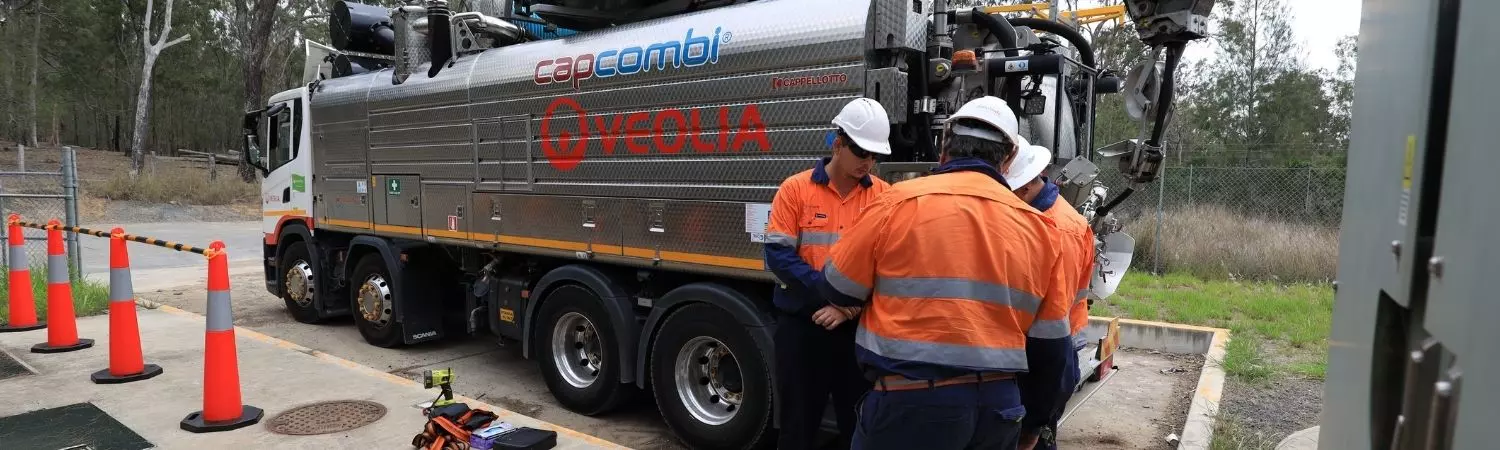
A liquid tanker will remove the grease trap contents from your site and can clean the trap to remove any build up. The driver will provide the appropriate EPA Waste Transport Certificate which is completed and lodged with the EPA once the driver returns to the designated Veolia depot.
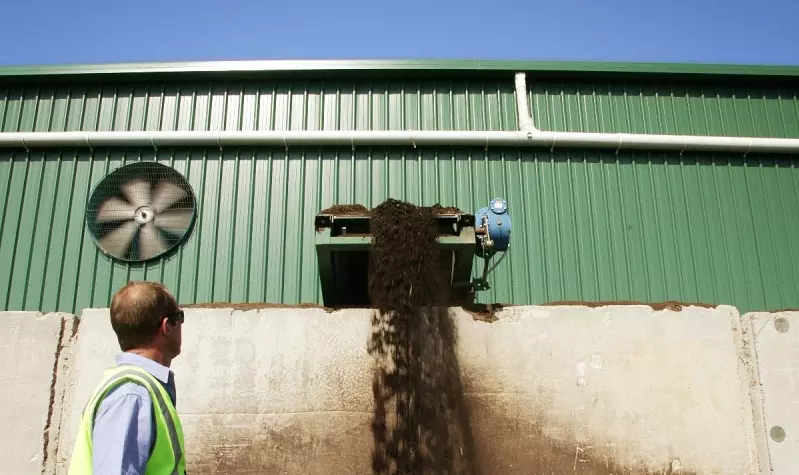
The driver will transport the grease trap waste to a Liquid Recovery and Treatment Facility. Grease trap waste is processed to separate the grease, water and sludge. The sludge can be reused by organic processing facilities in their composting process, the residual material can also applied to agricultural pastures. Water separated from the grease trap is disposed of as a trade waste down the sewer.
Scheduled Grease Pump-Out
Routine collection on the cycle your trade waste agreement specifies, or on the cycle your actual FOG generation warrants if that is shorter. We hold the schedule and attend without needing to be chased.
Full Pump & Clean
Complete removal of the trap contents, including the settled solids layer that a partial pump-out leaves behind, followed by cleaning of the walls, baffles and inlet and outlet pipework. A trap that is only ever skimmed loses capacity permanently.
Out-of-Hours & Overnight Servicing
Servicing can be scheduled around trading hours, so that our work happens when the kitchen is closed rather than during operating hours.
Emergency Response
Priority attendance for overflowing traps, backed-up floor wastes and blocked kitchen lines.
Waste Documentation
Service records and waste tracking documentation issued for every visit, in the format your water authority requires for inspection and audit.
Speak to a Veolia Waste Specialist
Complete the short form and a member of our Veolia waste team will be in touch shortly to assist with your enquiry.
Why choose Veolia?
Our comprehensive grease trap cleaning services handle every stage of the waste management process. From safe collection, treatment and recycling to EPA certificate lodging, we ensure that grease waste is one less thing you need to worry about.
Trade waste agreements & your obligations
Discharging to a sewer network from a commercial kitchen requires a trade waste agreement with your water authority. It sets the servicing frequency, the discharge limits your outflow must meet, and the records you are required to keep and produce on request.
We ensure you remain compliant and avoid excess-discharge charges and penalty notices. Our teams provide service records and the appropriate EPA Waste Transport Certification after every collection in the required format.

EPA Documentation
Documentation is issued automatically. Service records go out after every visit, so you're not assembling a compliance file the week an inspection is booked.

Market Leading Service
We don't just skim. We remove the solids layer and clean the baffles, which is what keeps the trap's rated capacity intact over time.

Flexible Scheduling
We service around your trading hours. Out-of-hours and overnight attendance is standard, not an exception with a surcharge attached.

Multi-Site Specialists
Groups and franchise networks run on one account, one schedule and one consolidated set of records across every venue.
Pricing is driven by trap capacity, servicing frequency, site access and location. Multi-site operators and shorter cycles attract better rates per visit.
The waste itself must be removed by a licensed transporter and taken to a licensed facility, so disposal cannot be done in-house. Trade waste agreements also commonly require servicing by an approved contractor with documented records, so self-servicing usually breaches the agreement even where the intent is good.
The trap stops separating and FOG discharges into the sewer. The immediate consequences are blocked lines and kitchen backups; the regulatory ones are excess discharge charges, penalty notices and, for persistent breaches, loss of trade waste consent.
Yes. Overnight and early morning servicing is routine, so the work does not interrupt trading.
Usually one of three things: a change in menu or volume, kitchen practice such as fats being poured down the sink, or a trap undersized for the site. We will tell you which it is at the next service rather than just shortening the cycle.
Yes. Service records and waste tracking documentation are issued after every collection in the format required for inspection.
Frequently asked questions
Speak to a Veolia waste specialist
To discuss your requirements with a Veolia waste specialist submit a contact form and a member of the team will reach out shortly.