


Excavate safely around live underground services
Vacuum excavation is common in industries where delicate utilities are present on-site. The use of water or air, instead of a more typical steel excavator allows precision and safety, ensuring infrastructure can be revealed without damage.
We provide non-destructive digging and vacuum excavation nationally, using both hydro and dry suction methods, with GPS mapping of what we expose and licensed disposal of everything we recover.
What is vacuum excavation? (Non-destructive digging)?
Vacuum excavation, also called non-destructive digging or NDD, uses a high-pressure water jet or compressed air to break up ground, and a vacuum system to lift the loosened material into an on-board spoil tank. Because nothing rigid enters the excavation, cables, conduits, fibre, gas mains and water services can be uncovered without damage.
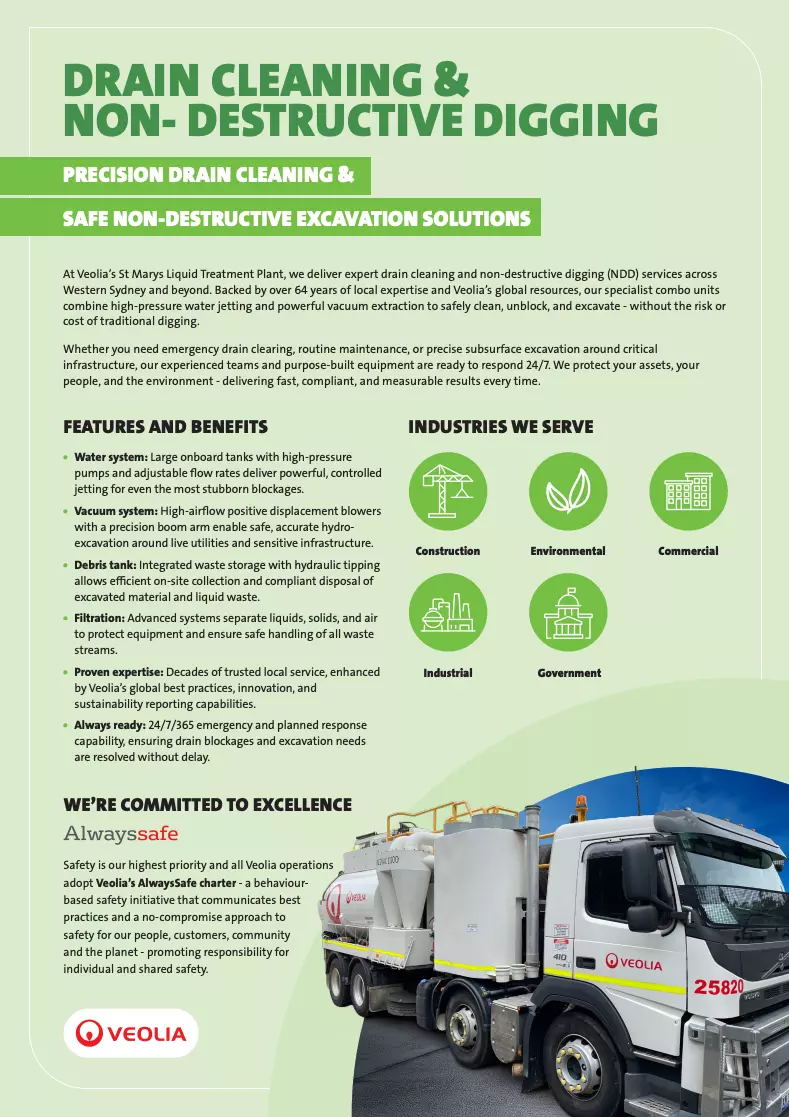
Drain Cleaning & Non-Destructive Digging (St Mary's, Sydney)
Backed by over 64 years of local expertise and Veolia’s global resources, our specialist combo units combine high-pressure water jetting and powerful vacuum extraction to safely clean, unblock, and excavate - without the risk or cost of traditional digging.
Learn more about our vacuum excavation services
Our specialist waste teams are experienced across a range of excavation services including both hydro and dry suction capabilities. The type of excavation used depends on the environment and the existing infrastructure that needs maintaining.
Where non-destructive digging is often used:
- Service potholing and proving before mechanical excavation begins
- Exposing gas, water, electrical, telecommunications and fibre assets for connection or repair
- Pit, pole and sign footing excavation
- Narrow trenching in built-up areas and around existing infrastructure
- Excavation around tree root zones where root damage must be avoided
- Confined and restricted-access sites where plant cannot be positioned
- Contaminated ground, where spoil must be contained and tracked rather than stockpiled
- Emergency exposure of a struck or suspected damaged service
Hydro Excavation
A pressurised water lance cuts through compacted ground, clay and road base. Hydro excavation is the faster method in hard or cohesive material and is the usual choice for service potholing, pit and pole holes, and trenching where the spoil does not need to be reused.
Dry Suction Excavation
Air lancing with high-airflow suction removes material dry, which keeps the spoil reusable as backfill and avoids introducing water around live electrical assets. Veolia's DRYset system delivers exceptionally high airflow, making dry suction viable on jobs where it would otherwise be too slow.
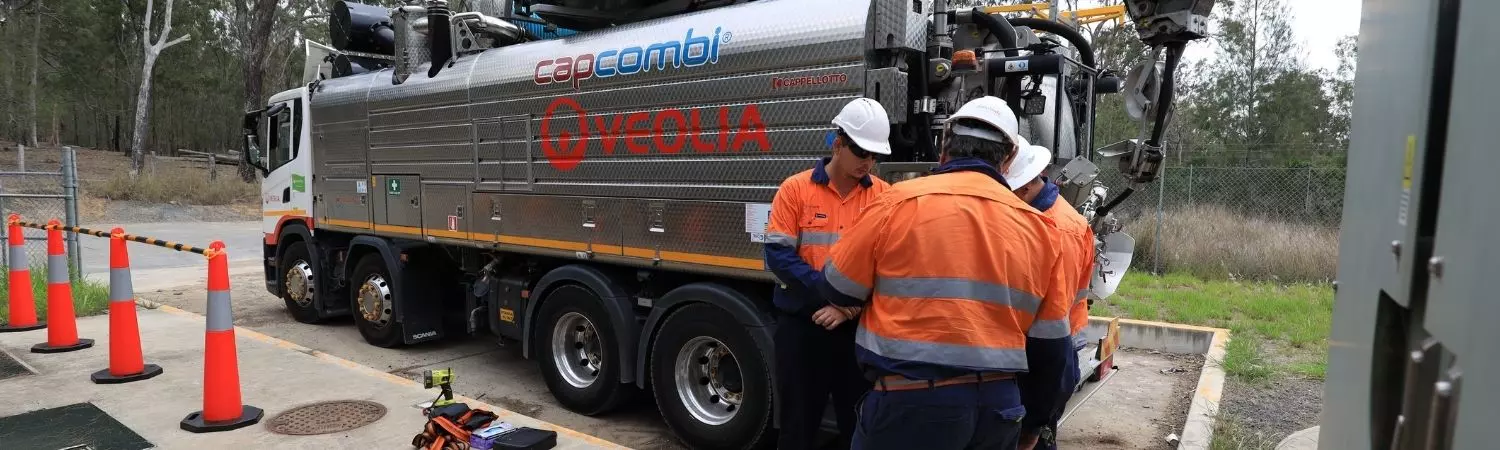
Why choose Veolia?
Our specialised vacuum excavation and non-destructive digging techniques include hydro and dry suction excavation, and we always ensure assets are located via GPS mapping of stormwater drains, manholes and gravity sewers prior to works.
Veolia also has a specific technology called DRYset, which uses the dry suction excavation method to generate an extremely high airflow, which is equivalent to five and up to eleven times the airflow of combination hydro trucks. This technology delivers a variety of benefits including:
- Reduced waste costs by up to 100%
- Eliminated downtime
- Increased productivity by up to 300%
- Improved site safety

Multi-Method
We run hydro and dry suction, so the method is chosen by what the job needs rather than by what the truck happens to be.

DRYset Specialists
DRYset high-airflow dry suction. Dry excavation at a rate that makes it practical on live electrical assets and on jobs where spoil is being reused.

GPS Mapping
GPS mapping of exposed assets. What we uncover is recorded, so the information outlives the job.

One Provider
Our excavation and our liquid waste network are the same business, so spoil leaves site on our tankers, with documentation, and without a second contractor.
Per cubic metre, yes. Per job, often not. The comparison that matters is against the cost of striking a service: repair, network outage, asset owner penalties, project delay and the incident investigation that follows. On sites with congested or poorly recorded services, NDD is usually the cheaper option once that risk is priced in.
Routine potholing is typically to three metres, and greater depths are achievable with extended boom and hose configurations depending on ground conditions and access. Tell us the target depth and ground type and we will confirm before mobilising.
Yes. Dry suction excavation is generally preferred around live electrical assets because it avoids introducing water into the excavation. Work is carried out to the asset owner's requirements and under the relevant permits.
Yes. Spoil removal, classification where required, transport and disposal at a licensed facility are all handled by Veolia, with documentation provided. You do not need a separate waste contractor.
Frequently asked questions
Speak to a Veolia specialist
To discuss your requirements with a specialist submit a contact form and a member of the team will reach out shortly.