


With Australia's waste crisis accelerating and landfill capacity declining, Energy from Waste provides a sustainable solution for managing waste that cannot be recycled. As a global leader operating more than 60 energy recovery facilities worldwide, Veolia brings proven expertise to Australia's waste challenge.
Energy from Waste isn't a replacement for recycling — it's the essential next step. It takes unrecyclable materials destined for landfill, recovers valuable metals and aggregates, and generates clean electricity and heat for industry.
Your questions matter. Whether you're curious about how it works, concerned about environmental impacts, or want to understand the science behind it, our experts are here to provide clear, honest answers.
Your questions answered
What is ‘Energy from Waste’?
Energy from Waste (EfW), also known as ‘energy recovery,’ safely converts non-recyclable materials (think contaminated plastics, food-soiled packaging or textiles), into a source of energy such as electricity, fuel, or heat.
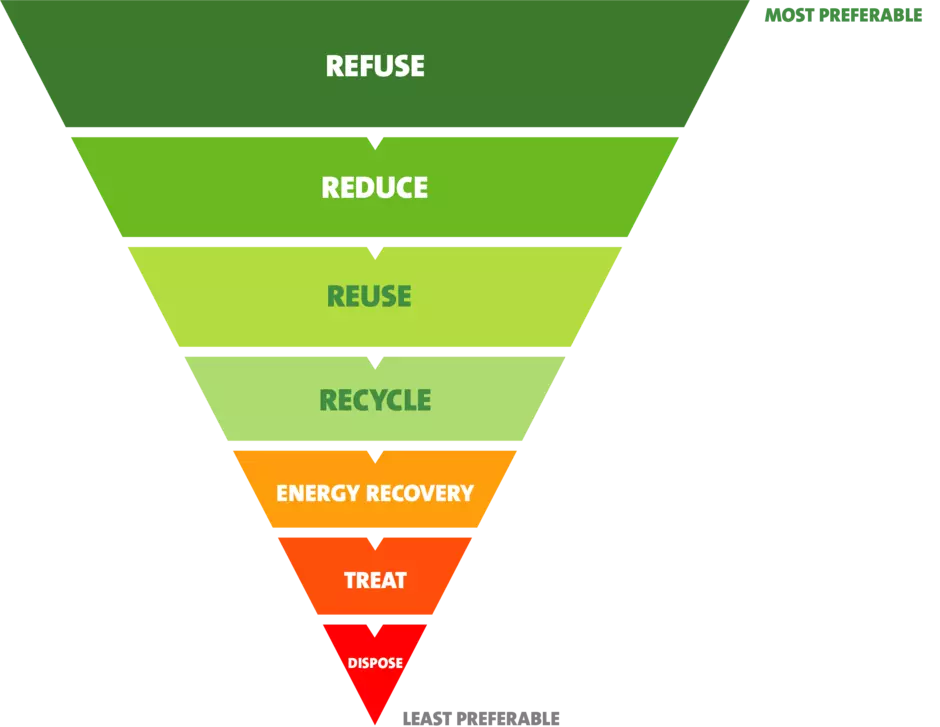
It’s not an alternative for recycling. It’s what happens to waste after we’ve reduced, reused and recycled everything we can.
You can see where it sits in the waste hierarchy diagram below.
Why energy from waste matters
- Reduces landfill: Diverts non-recyclable materials that can't be composted or recycled, helping preserve our limited landfill capacity.
- Generates clean energy: Converts waste into reliable, locally-generated baseload electricity that powers our region.
- Supports recycling: Works alongside existing recycling and resource recovery systems - not in competition with them - by focusing only on residual waste.
- Improves environmental outcomes: Reduces greenhouse gas emissions from landfill using proven, advanced combustion and emission control technologies that meet strict environmental and health standards.
- Recovers valuable resources: Plays a vital role in the circular economy by extracting metals and other materials that would have otherwise been buried in landfill.
What waste goes to an Energy from Waste facility in Australia?
The goal is always to recycle first. Energy from Waste handles what's left — what would otherwise go to landfill.
Energy from Waste can safely process household waste (what we call municipal solid waste or MSW). But in Australia, we only want to receive materials that genuinely can't be recycled.
When households separate their waste properly, it means we're only processing what truly can't be recycled or composted.
So what actually goes to Energy from Waste? Things like:
- Soiled pizza boxes
- Greasy plastic wrap
- Raw meat trays from supermarkets
- Plastic lined cardboard coffee cups
- Laminated pouches
- Nappies and hygiene products
Does energy recovery stop people from recycling?
No — and the evidence proves it.
Countries with the highest recycling rates also use energy recovery as part of integrated waste management:
🇨🇭 Switzerland: 53% recycling + 47% energy recovery
🇩🇰 Denmark: 50% total recycling + 49% energy recovery + 1% landfill
🇪🇺 European nations where over 450 facilities operate maintain strong recycling programs
Why? Because energy recovery handles what can't be recycled, not what can be.
The goal is always to recover whatever we can through reuse and recycling first, followed by energy recovery—with landfill as the last resort.
What kind of experience does Veolia have in Energy from Waste?
We understand trust must be earned, especially in communities where we operate.
As a global leader with nearly 220,000 employees worldwide and decades of experience operating energy recovery facilities to the world's most stringent standards, we bring proven expertise.
We're committed to:
- Transparent operations with publicly available monitoring data
- Exceeding regulatory requirements
- Ongoing dialogue with communities through regular liaison meetings and stalls at markets, shopping centres, community halls, and other popular public spaces, so anyone can meet our people and chat with us face-to-face about Energy from Waste
- Strict licensing conditions and independent verification
- Long-term investment in the communities where we operate
We acknowledge that operating complex facilities comes with responsibility. When issues arise, we respond promptly, transparently, and invest in world-leading solutions.
INTRODUCING EFW
How does Energy from Waste actually work?
Energy recovery from waste works like conventional coal or gas combustion where the steam powers a turbine to produce electricity. But instead of using fossil fuels, Energy from Waste technology is highly efficient and has been adapted for modern non-recyclable waste materials.
The process:
1️⃣ Residual waste arrives
2️⃣ Combustion → Waste burns at 850°C+ in a controlled, oxygen-regulated environment
3️⃣ Energy generation → Heat creates steam that drives turbines, generating electricity
4️⃣ Cleaning → Advanced systems to remove 99.9% of pollutants from emissions
5️⃣ Metal recovery → Magnets extract metals from ash for recycling
6️⃣ Power export → Electricity goes to the grid; heat can warm local homes and be used by industry including agriculture
The result:
- 3 tonnes of waste generates the same amount of electricity as 1 tonne of coal
- Produces a low-carbon energy alternative
- Provides reliable, 24/7 continuous power that complements intermittent renewables like solar and wind
- Generates both electricity and heat for nearby homes, businesses, and industries including agriculture
- Strengthens local energy security and grid stability
- Reduces landfill demand by over 90%
Who else is using this technology?
Energy from Waste is proven technology used safely worldwide. Over 450 facilities operate in Europe alone with many of them close to major cities near homes, schools, and farms.
Globally, Veolia operates more than 60 of these energy recovery facilities, bringing decades of expertise to Australia.
Paris heats its hospitals and museums (including the Louvre) using energy from these facilities. If they posed the risks some claim, would major European cities operate them in densely populated areas?
How does Energy from Waste differ from ‘incineration’?
Let's clear this up — there's a world of difference.
Old-style incineration: Simply burning waste with little to no emission controls. No energy captured, no heat recovered. This outdated approach isn't used in modern facilities.
Modern Energy from Waste: State-of-the-art facilities that combust residual waste in highly controlled environments at 850°C+ with:
✅ Advanced flue gas cleaning systems (so near to zero emissions enter the atmosphere)
✅ Continuous emissions monitoring
✅ Energy recovery through steam turbines
✅ Strict regulatory compliance
✅ Minimal ash residue
Here's what's changed: Environmental standards have become dramatically stricter over the past 30 years. For example, dioxin limits today are more than ten times tighter than they were in the 1990s.
The bottom line? Modern Energy from Waste is about control, technology, and purpose — turning waste into a resource, not just burning it. And it's clear - modern energy recovery facilities and ‘incineration’ are just not the same thing.
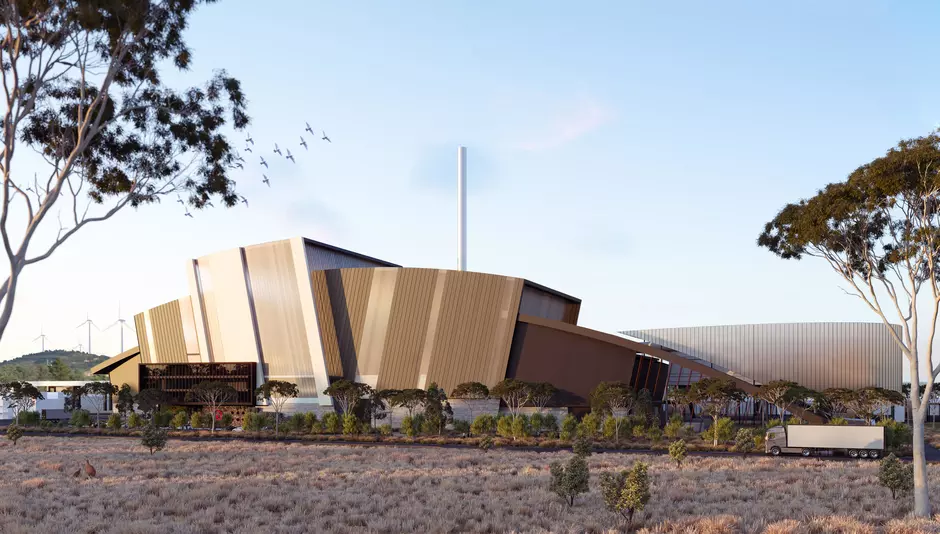
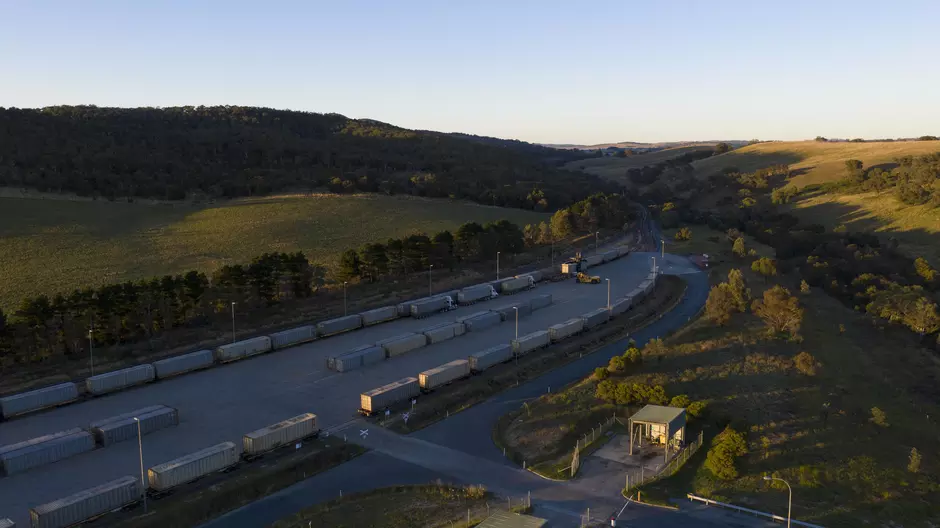
Image: Veolia's proposed ARC Energy from Waste facility in NSW
TECHNOLOGY
Why is energy recovery an important solution for non-recyclable waste?
Australia is facing a genuine waste crisis. Landfill capacity is diminishing across the country, forcing waste to travel longer distances and increasing costs for households and businesses.
Energy from Waste addresses this crisis by:
- Safely managing non-recyclable residual waste
- Generating clean electricity for communities
- Recovering metals for recycling
- Producing aggregates for reuse
- Reducing greenhouse gas emissions compared to landfill
It follows the waste hierarchy: avoid waste first, reuse, recycle, recover energy, and only landfill as a last resort.
BENEFITS OF EFW
What comes out of the stack? Are there harmful emissions?
Stack emissions consist of approximately 99.9% normal atmospheric gases — nitrogen, oxygen, carbon dioxide, argon, and water vapour (steam).
The remaining 0.1% may include trace pollutants, which are monitored using Continuous Emissions Monitoring Systems.
Veolia's facilities are designed to meet the European Union's Industrial Emissions Directive and Best Available Techniques — among the world's most stringent standards.
Important context: Government data shows that wood heaters, small engines, and vehicles contribute far more to local air pollution than a modern energy recovery facility.
Will emissions affect air quality in surrounding areas?
Comprehensive Air Quality Impact Assessments — prepared by independent consultants in accordance with regulatory requirements — confirm that predicted ground-level concentrations at homes, schools, and farms will be negligible and well within health-based criteria.
These assessments are reviewed by multiple government agencies including environmental protection authorities.
Veolia also commits to installing real-time ambient air quality monitoring stations with all data made publicly available — exceeding regulatory requirements.
Is Energy from Waste safe for the community and environment?
Yes. Independent research, including systematic reviews by the UK Government, has found no clear evidence of associations between exposure to emissions from modern, well-regulated Energy from Waste facilities and adverse health outcomes.
These facilities make only a small contribution to local air pollution compared to other sources such as vehicles, wood heaters, and small engines.
Modern facilities are highly regulated, continuously monitored, and must meet strict air quality standards. This is why over 450 facilities operate safely across Europe, many within major cities.
Will this affect local agriculture, soil, or water?
No. Human Health Risk Assessments model highly conservative worst-case scenarios over extended periods.
These have found:
- Rainwater tanks, groundwater, recreational waters, soil, and locally grown produce remain well within safety standards
- Risks assessed as negligible
- No measurable change in soil quality
- No detectable change in produce attributable to facility emissions
Facilities are designed with safeguards including ongoing monitoring programmes, and strict licensing conditions.
Does Energy from Waste create odour?
Energy from Waste facilities are fully enclosed and operate under negative pressure. Any odorous air is drawn into the furnace and destroyed at high temperatures.
This is why these facilities operate safely within European cities without impacting residents.
How will emissions be monitored?
Veolia is committed to transparency:
✅ Continuous in-stack monitoring for key pollutants (think nitrogen oxides, carbon monoxide, dust or acid gases)
✅ Periodic independent third-party stack testing as required by regulations
✅ Real-time ambient air quality monitoring stations (exceeding regulatory requirements)
✅ All data made publicly available in near real time
✅ Detailed monitoring programs for ecological and agricultural receptors throughout the facility's operational life
This approach exceeds regulatory requirements and demonstrates our commitment to protecting communities and the environment.
HEALTH & SAFETY
The submission window for our Energy from Waste enquiries has now closed. We are no longer accepting new submissions through this form.
If you have a general enquiry please contact us below.
Our proposed Energy from Waste facilities

NSW Parliamentary Select Committee’s inquiry into proposed Energy from Waste facilities
Contact Us For All Media Enquiries
Manager Public Relations
Alvin Stone
Tel: 0418 617 366
Email: [email protected]